About
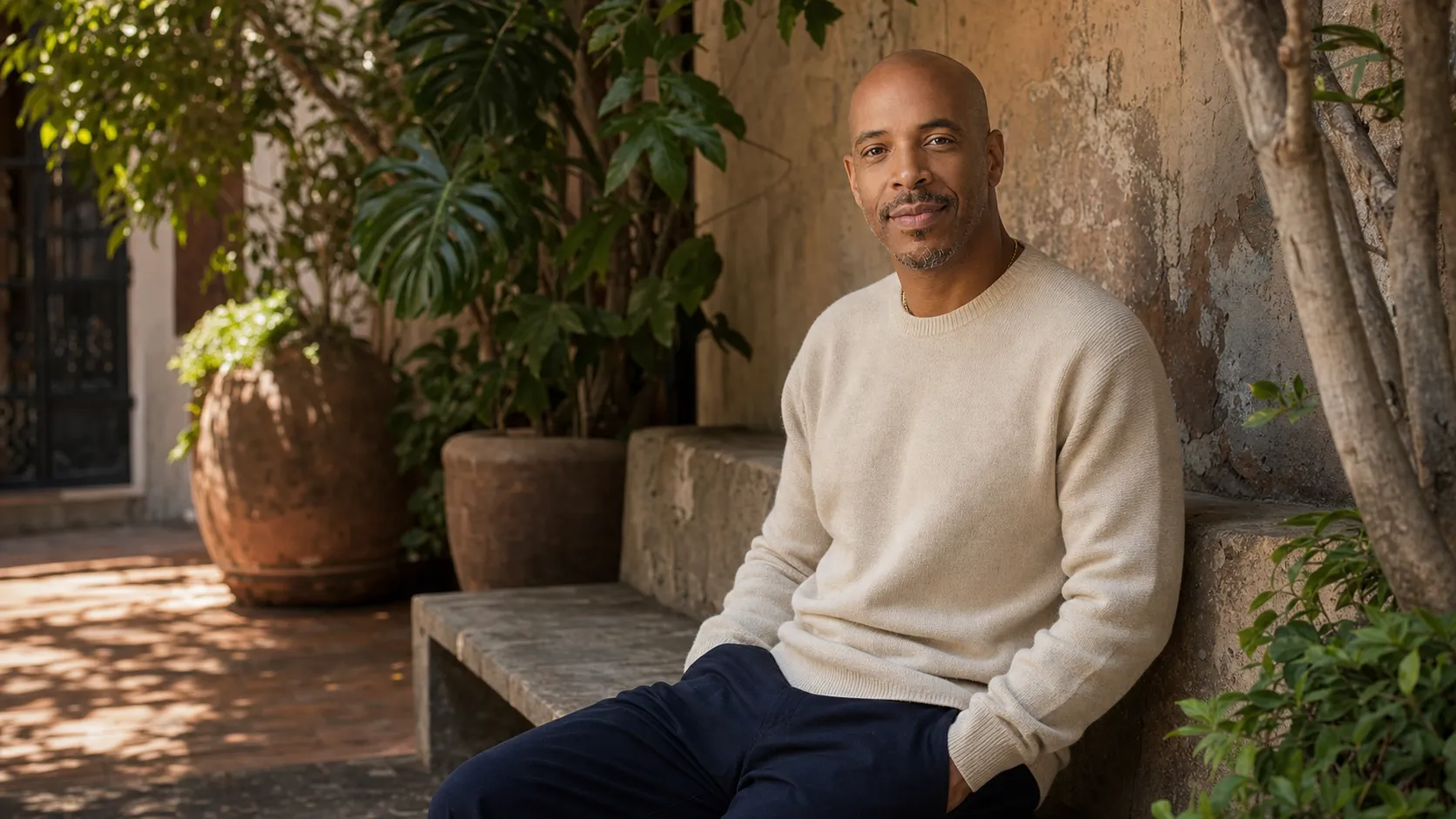
Welcome. I'm Brant.
Over three decades, I have built, invested in, and led innovation across global companies, early digital products, renewable-energy systems, venture capital, and climate technology—while making a life in art, music, inner practice, and gathering.
I have never been able to stay in one lane, because the questions that matter most do not respect the lines between them.
I began with a question about minds and machines. It became a life at the seam between innovation and the human work of making change meaningful, resilient, and real.
The throughline is integration: refusing to separate the technologist from the artist, strategy from spirit, institutional consequence from lived experience, or achievement from aliveness. I have learned to see technological change not only as a question of capability, but as a question of purpose, power, culture, relationship, and consequence.
This range has taught me to stay curious: to look beyond the obvious, seek perspectives and ways of knowing beyond my own, and notice what each makes visible. Integration, for me, means bringing those perspectives into relationship without flattening their differences—so that we can see more of the whole and choose with greater wisdom.
01Learning across disciplines and voices
I arrived at Stanford in 1993 intending to study physics because I wanted to understand reality. Then I found Symbolic Systems: computer science, philosophy, psychology, and linguistics braided around a question that has stayed with me—what happens in the space between human minds and computer-based machines?
Outside the classroom, I led Talisman, an a cappella group that sang from the Olympics to Carnegie Hall and the White House. The university taught me to cross disciplines. Music taught me why that crossing matters: harmony is not uniformity. It appears when distinct voices offer themselves fully and listen closely enough for something larger to emerge. That became my earliest model for how people think and create together.
02Scale, culture, and the studio
At PepsiCo, I worked across Latin American and Caribbean product strategy. At Nestlé, I held responsibility for the Caribbean confections business. In Silicon Valley during the first internet wave, I led user-experience and interface work for emerging digital products while human-computer interaction was still unfamiliar territory. Those experiences taught me how ideas move through large organizations and across cultures—and that even powerful ideas become real only through communication, trust, distribution, and the often-invisible work of institutions.
Alongside that work, I built a contemporary art gallery, an independent publishing collective, and community-centered real estate. The boardroom and the studio never felt like opposing lives. The boardroom taught me about scale and consequence; the studio kept ambiguity, imagination, and the irreducibly human in view. Each made the other more perceptive.
03Inner practice: another way of knowing
At twenty-seven, a ten-day Vipassana retreat changed how I understood the relationship among attention, the body, and experience. It did not give me a universal conclusion or replace the need for evidence. It changed what I was willing to recognize as a disciplined encounter with reality.
Until then, I had treated the rational and the spiritual as separate territories. Contemplative practice gave me another way to observe before explaining, remain present to uncertainty, and experience the limits of intellect from inside rather than merely acknowledge them in theory. It did not ask me to abandon analysis. It made analysis one part of a larger practice of perception.
04Berlin: investing in and building the energy transition
After an MBA at IMD, I moved to Berlin. As Director of Electric Mobility and Energy Storage at iSol Ventures, I directed the fund’s investment in those two categories. I then co-founded Younicos and served on its executive board, leading business development, sales, and marketing for seven years as the company deployed Europe’s first megawatt-scale commercial grid battery and the world’s first 100% renewable microgrid. The work was technical, commercial, and political at once: renewable energy could not transform the system without new forms of coordination, control, investment, and trust.
At the same time, I performed with the Berlinquents and hosted more than a hundred dinners and salons in my apartment—long nights of art music, food, argument, and strangers becoming friends. The business builder and the salon curator were the same person. In the grid and around the table, I was learning that resilience does not come from maximizing every individual part. It comes from relationships that let a system listen, respond, and adapt.
05Commercialization, capital, and institutional change
At Future Energy Ventures, as an Entrepreneur in Residence, I developed commercialization paths for leading-edge technologies, helped business leaders inside innogy identify how new capabilities could create opportunity across their businesses, supply chains, and distribution, vetted technologies and entrepreneurs entering the innovation hub, and recommended investment decisions.
I later joined Third Derivative at Rocky Mountain Institute as COO with a mandate to redesign the organization, the accelerator’s delivery engine, the activation of its corporate and venture ecosystem, and its business model. I was promoted to Managing Director of Rocky Mountain Institute with full management responsibility for the entire Third Derivative program. During my tenure, we helped mobilize more than $500 million for climate technologies with gigaton potential while building a global portfolio spanning every major emissions sector.
That work brought founders, investors, corporations, philanthropy, research, and public purpose into the same field of action. It also made the limits of invention unmistakable. A technology can work and still fail to change the world if the surrounding incentives, relationships, institutions, and structures cannot carry it.
06Mexico City: one whole life
I now spend my time primarily between Mexico City, Houston, San Francisco, and Berlin. I coach leaders, advise organizations, write, speak, and host gatherings designed for deep connection and inquiry. The questions and possibilities that first drew me to human-computer interaction have returned with new urgency as the capabilities of artificial intelligence accelerate. But I no longer approach it from one discipline or role. I meet it with the experience of building and investing, the lessons of institutions, the intelligence of art and music, the discipline of inner practice, and the relationships in which every abstract system becomes real.
Around the work is the life that keeps me grounded and centered in my passions: cooking for friends, tending plants, singing and playing my guitar, building computer programs to give me back time and productivity, traveling as encounter, studying older wisdom traditions, and sometimes sitting in silence. These are not escapes from consequential questions. They are ways of seeing what abstraction misses and remembering what all our systems are ultimately meant to serve.
After three decades of moving among worlds, I am not trying to collapse them into a single identity. I am trying to let each correct and enlarge the others. That is closer to what integration means to me now: not sameness, but a life capable of holding difference without splitting apart.
Bring me the change you are carrying.
Today, this experience takes three forms: coaching and advisory for leaders and organizations navigating change; gatherings designed to help people think and create together; and speaking and facilitation that make unfamiliar possibilities understandable, discussable, and actionable.